The Right to Stop: Making Jidoka a Working Habit, Not a Poster
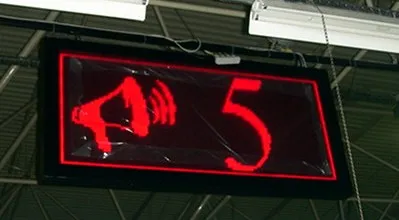
Photo: Mustafasari at Turkish Wikipedia, CC BY-SA 3.0, via Wikimedia Commons
Every operations leader has seen the poster. A worker pulls a cord, a light turns amber, and the line halts before a defect travels downstream. The image is clean, orderly, and easy to admire. The harder question is whether anyone in the organization would actually be thanked for pulling that cord on a Tuesday afternoon when a customer commitment is at risk.
Jidoka—often translated as autonomation, or automation with a human judgment—is less about cords and lights than about authority. It gives the person closest to the work the right to stop the work when the standard cannot be met. In Japan, that right is embedded in the discipline of the production line. In many U.S. companies, it exists in policy but not in practice. The result is a team that talks about quality while quietly shipping exceptions.
What Jidoka Actually Asks of a Manager
The term is sometimes reduced to automation, but the original idea is more demanding. A machine should detect an abnormal condition and stop itself; a person should be able to do the same without waiting for permission. The purpose is not to celebrate interruptions. It is to prevent defective work from moving forward and to surface the condition while it is still small.
For a manager, jidoka creates a genuine test of priorities. A stop costs time, and time is visible. A defect that escapes costs trust, and trust is often invisible until it is gone. Leaders who praise quality in the abstract but penalize stops in practice teach the team to keep the line moving and hide the evidence.
The American Reflex and Its Costs
U.S. teams are not short of quality language. They are short of permission. The reflex to ship at all costs is reinforced by quarterly targets, customer escalations, and the reasonable fear that stopping work will be read as weakness. So people route around problems. They add a manual check, send a private message, or promise a fix in the next release.
That pattern produces three predictable costs. First, defects travel farther and become more expensive to correct. Second, the team learns that escalation is risky, so early signals disappear. Third, the organization loses the data it needs to improve, because every stop that never happened is a lesson that never entered the system.
A Three-Tier Stop Protocol
Authority is easiest to exercise when it is specific. A three-tier protocol gives people a clear range of action without turning every issue into an executive crisis.
Tier 1: Local Pause
Any team member may pause their own task or a small work cell for up to fifteen minutes when they see a suspected defect, a missing input, an unsafe condition, or a standard that cannot be met. No approval is required. The person notifies the team lead in the team channel and states the trigger in one sentence. The objective is containment, not solution.
Tier 2: Line Stop
A team lead or designated stop authority halts the broader workflow when a Tier 1 pause cannot confirm safety or quality within fifteen minutes, when the issue crosses team boundaries, or when the same defect appears twice. The stop owner posts status, names an incident owner, and writes a resume criterion. If the stop exceeds two hours or affects an external commitment, it moves to Tier 3.
Tier 3: Stand-Down Review
A manager or director, with the relevant functional partners, decides whether to resume, re-sequence, or re-plan. This tier is the only place where a leader may authorize shipping with a known exception, and the rationale must be recorded. The purpose is not to make stopping hard. It is to make tradeoffs explicit.
The Fifteen-Minute Stop Huddle
A stop without a huddle becomes a negotiation. A short, repeatable huddle keeps the team focused on containment and restart conditions.
- Minutes 0–2: State the trigger in one sentence and confirm what is stopped.
- Minutes 2–5: Contain the issue. What is quarantined, and who is affected?
- Minutes 5–10: Share evidence. What do we know, what do we not know, and which tier applies?
- Minutes 10–13: Define the resume criterion. What specific condition allows work to restart?
- Minutes 13–15: Record the stop and communicate the decision.
The huddle lead does not have to be the manager. A rotating lead reinforces that authority belongs to the system, not to a title. The scribe captures facts, not blame. The stop owner ensures the resume criterion is testable rather than aspirational.
The Blameless Stop Log
If stops are treated as incidents, people will avoid them. If stops are treated as data, people will report them. A blameless stop log makes the difference concrete.
Record the stop ID, date and time, tier, trigger category, workflow location, immediate containment, resume criterion, time to resume, owner, root-cause hypothesis, follow-up action, and a repeat flag. Do not use the log for individual performance ratings. Review it weekly for twenty minutes and monthly for trends.
Useful measures include stops per week, median time to resume, repeat stop rate, and the percentage of follow-up actions closed. A team with zero stops is not necessarily healthy. It may simply be silent.
What Leaders Must Do
The protocol only works if leaders behave as if the stop is legitimate. Respond within minutes, not hours. Thank the person who stopped the work, publicly if possible. Do not negotiate the stop before containment. Protect the stopper from customer escalation while the facts are gathered. Close the loop with visible action, even when the action is a decision not to change the process.
The andon cord is not a decoration. It is a decision right. Teams that can stop the line are not slower in any meaningful sense. They are faster at finding problems, cheaper at fixing them, and more credible when they say the work is ready.